


SupernaturalComplete · 10 Ch
The Clockmaker of Canyon Road
Novelora Originals — Supernatural DeskFiction
Supernatural
~67 min
The Clockmaker of Canyon Road
Complete · 10 chapters · Ch. 1–4 free · Full unlock $5.99
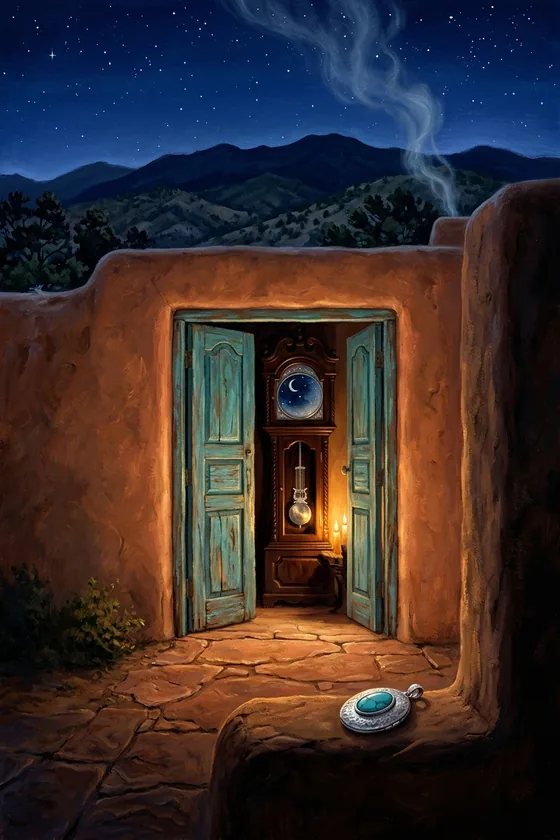
Inheriting her vanished great-uncle’s 1896 adobe clockshop on Santa Fe’s Canyon Road, horologist Paloma Esquivel discovers an unfinished seven-foot walnut-and-silver astronomical clock whose pendulum swings at dusk without weights—turning its painted moon dial backward one full hour while piñon smoke fills the dry room. Partnering with State Police art-crime investigator Diego Montoya, Paloma decodes the clock’s hidden silver vault key and starlight map to expose a $14 million 1790 Spanish water-grant murder before gallery mogul Leland Corwin silences her too.
18+ Supernatural MysteryRead Ch. 1